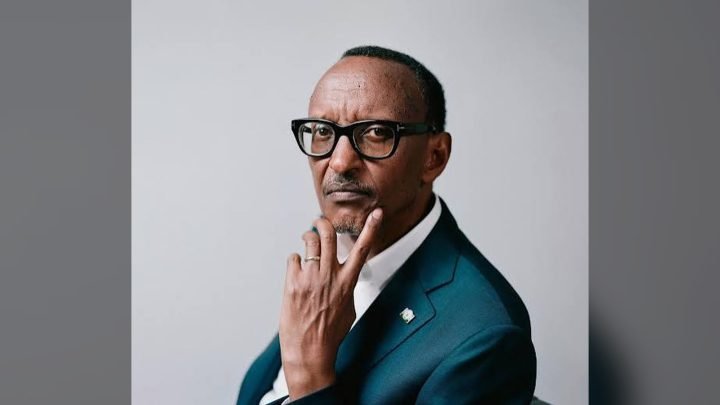






The FDLR: Rwanda's all-purpose excuse for invading Congo
Whatever the accusation, Kigali has a four-letter answer: FDLR. For thirty years, Rwanda has claimed it goes into Congo to protect itself from this armed group. And for thirty years, that "protection" has meant the same thing: cities seized, mines plundered, millions of Congolese driven from their homes. The FDLR are not the reason Rwanda is in Congo. They are its alibi. Radar 243 takes the pretext apart, fact by fact.

First things first: who are the FDLR?
The Democratic Forces for the Liberation of Rwanda are a Rwandan armed group, founded in eastern Congo by former Hutu soldiers and militiamen who fled after the 1994 genocide. They live on Congolese soil, but their fight is over who rules in Kigali. Radar 243 does not defend the FDLR. They must be disarmed and their leaders held to account for their crimes, including those committed against Congolese, who have been their first victims for thirty years.
But fighting an armed group is one thing. Turning it into a permanent licence to invade your neighbour is quite another.
Thirty years of the same excuse
This argument is nothing new. In 1996, the Rwandan army marched into Zaire, officially to break up the refugee camps where génocidaires were hiding. It kept going all the way to Kinshasa. In 1998, it came back, again in the name of its own security, and occupied much of the east for five years.
In June 2000, the Rwandan and Ugandan armies fought each other in Kisangani, more than a thousand kilometres from the Rwandan border, for control of the city and its diamonds. Hundreds of Congolese civilians were killed. The FDLR had nothing to do with it. In 2001, a UN panel of experts documented the illegal exploitation of Congo's resources by foreign armies, Rwanda's included.
Thirty years on, the script hasn't changed. Only the names of the rebellions have.
1. A threat that has all but melted away
Today's FDLR bear no resemblance to the army of 1996. According to the UN experts' report published in July 2025, they were down to about 1,000 fighters by early 2025, poorly equipped and divided.
Their leaders have been taken out. Military commander Sylvestre Mudacumura, wanted by the ICC, was killed in North Kivu on September 17, 2019; Juvénal Musabimana, head of the RUD-Urunana splinter group, was killed on November 9, 2019. Both were Congolese army operations in the early days of the Tshisekedi presidency. It wasn't Rwanda that decapitated the FDLR. It was Congo.
The last known deadly incursion into Rwanda dates back to the night of October 4-5, 2019, when a splinter faction killed 14 civilians in Kinigi, near Volcanoes National Park. A grave crime. But a weakened group that hasn't mounted a major attack in Rwanda for seven years cannot justify deploying 6,000 to 7,000 Rwandan troops in the Kivus, the UN's estimate for late 2025. A thousand fighters on one side. Six to seven times as many soldiers on the other. The numbers don't add up.
2. If the FDLR are the target, why grab cities?
The UN experts' final report (S/2025/446) is explicit: Rwandan forces weren't out to neutralise the FDLR but to seize new territory. The experts tie these conquests to access to minerals and fertile land.
You don't hunt down a thousand fighters by setting up shop in Goma, Bukavu and Uvira. You don't hunt them down by taking over the Rubaya coltan mines, which produce around 15 percent of the world's coltan. You don't hunt them down by installing parallel administrations, appointing governors and levying taxes. There's a word for all that: occupation.
Rwanda talks about its security. But who is protecting the security of Congolese, driven from their villages by the millions?
3. The FDLR are in the occupied zones: so how many have been taken out?
Since January 2025, the AFC/M23 and the Rwandan army have controlled much of the territory where the FDLR operate. They have had every opportunity to hunt them down. The M23 handed a few prisoners over to Rwanda, including General Ezechiel Gakwerere on March 1, 2025. But according to the experts' midterm report (December 2025), joint RDF-M23 operations against the FDLR since April 2025 have failed to hit their main targets.
Which begs the question: does Rwanda actually want to finish off the FDLR? On January 22, 2026, its ambassador in Washington made winding down its "security coordination" with the M23 conditional on neutralising the FDLR. In other words: as long as the FDLR exist, the Rwandan army stays. Kigali has every interest in keeping alive the threat that justifies its presence. The pretext has become a cash cow.
4. What about the Congolese army?
Kigali accuses the FARDC of working with the FDLR. UN experts have documented operational links between some units and the group in the fight against the M23. Kinshasa doesn't deny it: under the Washington accords, the DRC signed up to a plan to neutralise them (CONOPS). That's the right course, and it must be seen through.
But one doesn't justify the other. Local collaboration, which Kinshasa has pledged to end, gives no neighbouring state the right to occupy provinces, back a rebellion and exploit mines. As the DRC reminded the Security Council, self-defence under the UN Charter covers nothing like what is happening in the Kivus. What Rwanda is doing in Congo isn't defence. It's aggression.
5. A Rwandan problem needs a Rwandan solution
The FDLR were born of a Rwandan crisis. Disarming them is essential, but it won't be enough until the political question of their return is addressed. Thousands of Rwandan refugees and their descendants are still living in Congo, thirty years on. Why does Kigali refuse any intra-Rwandan dialogue? Because a problem solved is no longer an alibi.
Rwanda's political problems cannot become a life sentence for the Congolese people. Congo should not have to pay in blood and minerals for its neighbour's internal divisions.
The bottom line
We do not defend the FDLR. We demand their disarmament. But we refuse to let their presence serve, indefinitely, as cover for the Rwandan army's occupation of our land. In 1996, it was the refugee camps. In 1998, it was security. In 2025, it was the FDLR. Tomorrow, it will be something else. Congo is not Rwanda's dumping ground for its problems, nor its private mine.
The FDLR by the numbers
- 1994: ex-FAR and Interahamwe flee to Zaire. 2000: the FDLR are founded.
- 1996 and 1998: the Rwandan army enters Congo in the name of its security.
- June 2000: Six-Day War between the Rwandan and Ugandan armies in Kisangani.
- 2009: joint DRC-Rwanda operation "Umoja Wetu" against the FDLR.
- Sept. 17, 2019: Sylvestre Mudacumura killed. Nov. 9, 2019: Juvénal Musabimana killed.
- Oct. 4-5, 2019: RUD-Urunana attack in Kinigi (Rwanda), 14 civilians killed.
- Early 2025: around 1,000 FDLR fighters (UN experts).
- Late 2025: an estimated 6,000 to 7,000 Rwandan troops in the Kivus (UN experts).
- Jan. 22, 2026: Kigali ties its withdrawal to neutralising the FDLR.
Sources. Report S/2025/446; RFI via AllAfrica, July 2025, the FDLR still active; RFI via AllAfrica, midterm report, Dec. 2025; Midterm report S/2025/858; ACLED, the 2019 Kinigi attack; The New Times, Musabimana killed; DRC letter to the Security Council, S/2026/62.