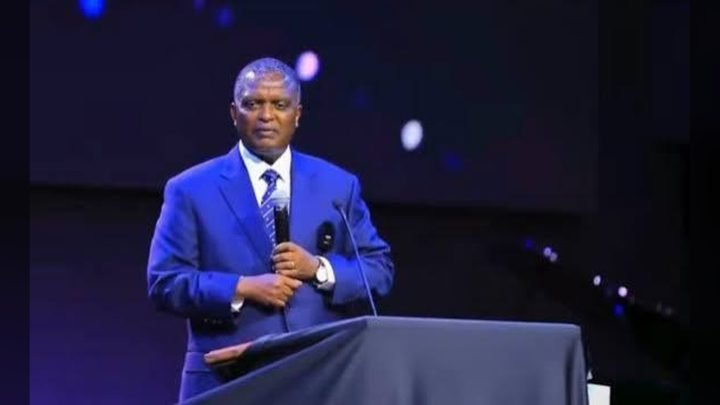
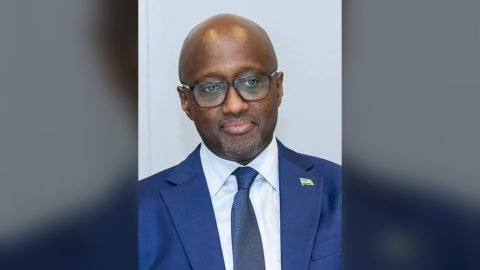


Olivier Nduhungirehe vs. the facts
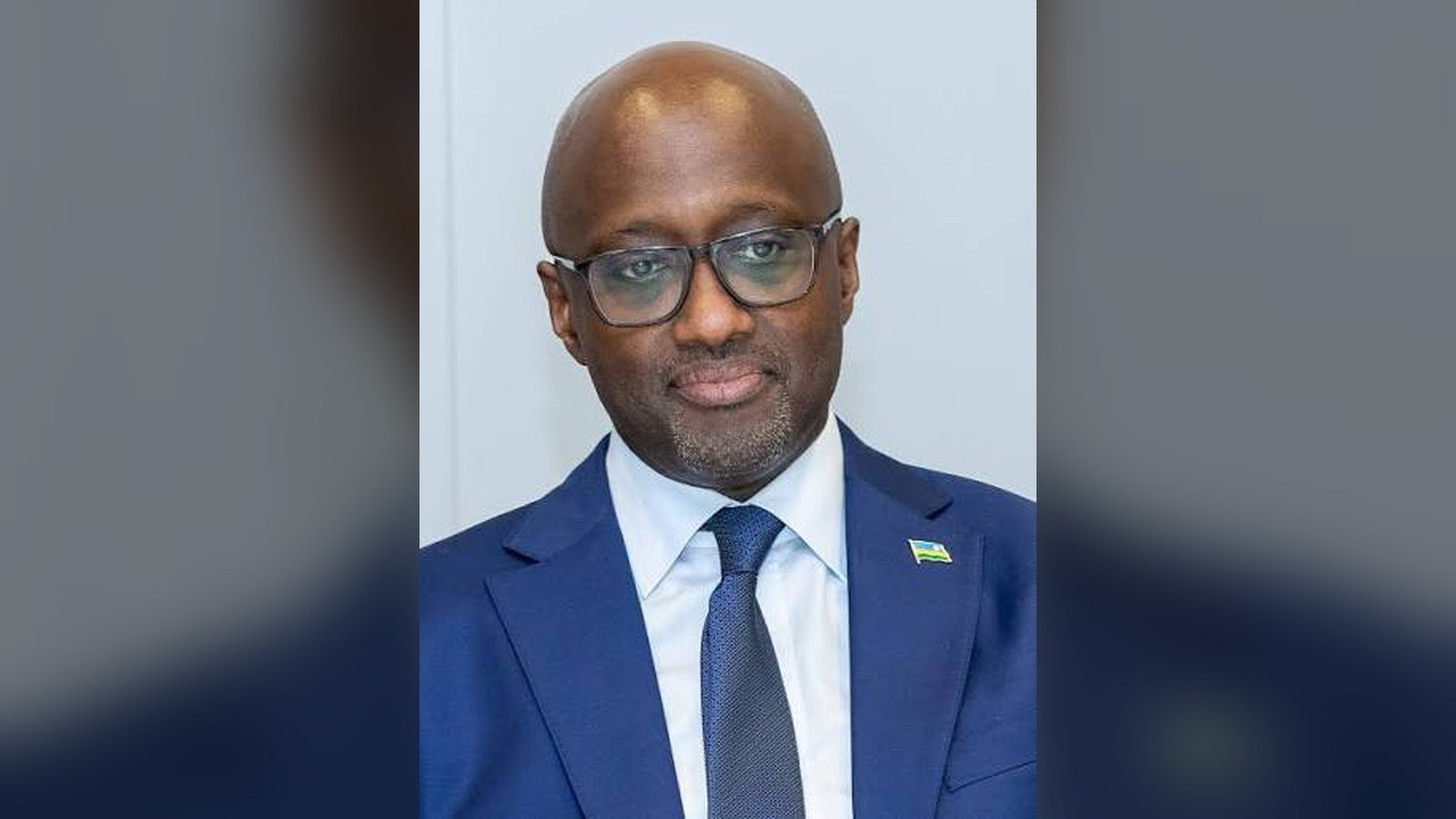
He is everywhere: on X, on TV panels, at summits. Rwanda's foreign minister, Olivier Nduhungirehe, denies, hits back and provokes. But his claims fall apart under the weight of the evidence. UN reports, US decisions and, in the end, his own ambassador's admissions have all contradicted him. Radar 243 has put his words to the test, claim by claim.

A minister who treats X as a battlefield
Getting the message out is part of any minister's job. But for Olivier Nduhungirehe, the DRC has become an all-consuming obsession, a permanent war fought on social media. Every criticism gets a comeback, every report a denial, every Congolese official a jibe. That is not diplomacy. It is propaganda in the service of an occupation.
Diplomacy is not measured in posts. It is measured in credibility. And that credibility is what we put to the test.
1. "We have no troops on Congolese soil": false
On March 15, 2025, in an interview with Le Monde, weeks after Goma fell (late January) and Bukavu followed (mid-February), the minister was emphatic: Rwanda has no troops in the DRC. In the same breath, he took a swipe at the credibility of the UN Group of Experts.
The documents say the exact opposite:
- The UN Group of Experts' final report (S/2025/446, July 3, 2025) finds that the AFC/M23 and the RDF "jointly" seized strategic and mining areas of North and South Kivu, Goma and Bukavu included. It describes an RDF forward command post in Gisenyi, across the border from Goma, and concludes that the goal was not to neutralise the FDLR but to grab territory.
- The fact-finding mission of the UN human rights office (A/HRC/60/80, September 5, 2025) documents Rwandan support for the M23 in training, equipment, intelligence and operations.
- The experts' midterm report (S/2025/858, December 2025) estimates that between 6,000 and 7,000 Rwandan troops were still deployed across the two Kivus.
Then came the admission. On January 22, 2026, in written testimony to the Africa subcommittee of the US House of Representatives, Rwanda's ambassador in Washington, Mathilde Mukantabana, acknowledged that Rwanda "maintains security coordination with the AFC/M23". The statement even promised a "gradual" wind-down of those measures.
You can't gradually withdraw something that doesn't exist. In ten months, Kigali went from flat denial to official admission. And it is not Kinshasa saying so: it is Rwanda's own ambassador, before the US Congress. Kinshasa promptly took the admission to the Security Council (letter S/2026/62). The minister did not tell the truth. The paper trail proves it.
2. When the reports sting, shoot the messenger
Faced with the UN's findings, Olivier Nduhungirehe never rebuts the facts one by one. He goes after the people who established them. It is the oldest trick in the book for those who have no answer.
Report S/2025/446 runs to more than 250 pages. It details troop movements, specific hardware (jammers, air defence systems, armed drones), areas under control, chains of command, photographs and cross-checked testimony. Seriously challenging it would take answers every bit as precise. Calling the experts "not credible" doesn't make what they documented go away. And they are not alone: the UN human rights office, Washington, London, Brussels and Berlin all reached the same conclusions.
3. Minerals: geology is no alibi for smuggling
Another of the minister's favourite lines: Rwanda has minerals of its own, since it sits on the same geological formation as the Kivus. No one disputes that. The real question isn't what lies under Rwandan soil. It is where the minerals Rwanda exports actually come from.
On that, the UN experts are specific. They describe the M23's exploitation of Rubaya's coltan, smuggling networks running into Rwanda, the looting of more than 500 tonnes of minerals stockpiled by traders in Goma and Bukavu from January 2025, and the blending of Congolese minerals into Rwandan output to launder their origin. In June 2026, Washington sanctioned the Gasabo Gold Refinery, which processed gold mined in the occupied areas. Geology is not an answer to a fraud investigation. It's a smokescreen.
4. The FDLR: the excuse for everything
Every time he is cornered, the minister steers the conversation back to the FDLR. It has been Kigali's refrain for thirty years. Three answers settle it.
The existence of an armed group does not give a state the right to invade its neighbour. Fighting one group does not entitle you to arm another, seize cities or set up a shadow administration. And if the FDLR really were the target, why do UN experts describe joint Rwandan-M23 operations to take Goma, Bukavu, Uvira and the mining areas? The FDLR number around a thousand weakened fighters. The Rwandan army has six to seven times that many troops on the ground. The pretext doesn't hold water. (See also our piece "FDLR: Rwanda's pretext".)
5. Foreign minister, or minister of spin?
The problem is not that he uses X. The problem is that he uses it to dismiss as fabrications facts established by international reports and official decisions. In this war, Rwanda is also fighting to impose its narrative: that of a threatened nation defending itself, when in fact it is occupying part of its neighbour.
That narrative serves a very specific purpose. It buys time. While everyone argues about the FDLR, about the "genocide" invoked at every criticism, about supposedly persecuted "Kinyarwanda-speaking Congolese", the minerals keep flowing out, the shadow administration digs in and civilians keep fleeing. Our answer boils down to three things: check, cross-check, read the documents.
6. Sanctions: playing the victim
Kigali denounces the sanctions as "unfair" and "lopsided". But the US decisions are specific: James Kabarebe on February 20, 2025; the RDF and four officers on March 2, 2026; Gasabo Gold Refinery on June 25, 2026; the Ministry of Defence and the Zigama financial arm on October 28, 2026. Washington cites military, logistical, financial and training support to the M23.
You can take issue with US policy. That doesn't make the charges disappear. A country with "no troops in Congo" doesn't get its army, its defence ministry and its soldiers' savings fund sanctioned. Rwanda is not the victim of sanctions. It is being sanctioned for what it does.
7. Francophonie: one story before, another after
Before the Phnom Penh summit, Kigali's line was uncompromising. On November 14, 2026, Rwanda refused to withdraw Louise Mushikiwabo's bid for a third term and vowed to "go all the way". Asked about calls to pull her out, the minister retorted that Rwanda takes "neither orders nor ultimatums".
The DRC, by contrast, said it was ready to withdraw its own candidate, Juliana Amato Lumumba, to clear the way for a consensus, notably around Romania's Dacian Cioloș. Thérèse Kayikwamba Wagner held firm: Mushikiwabo had to go.
The outcome: no consensus, no third term. Heads of state extended her mandate by twelve months and pushed the election back to 2027. According to Kinshasa, Rwanda has pledged not to field a candidate. After the summit, the Rwandan minister took to X to accuse his Congolese counterpart of lying, claiming Rwanda had proposed the compromise all along. The man who refused any withdrawal is now claiming credit for the deal. Both versions can't be true. And it's his that keeps shifting.
The same playbook, every time
Put these seven episodes side by side and a method emerges. First, deny. Then attack whoever brings the evidence. Then change the subject (the FDLR, "Rwandan" minerals). And finally, once the fact can no longer be hidden, rephrase it and claim you said so all along. That is exactly what happened between March 2025 ("no troops") and January 2026 ("security coordination").
The bottom line
When Olivier Nduhungirehe speaks, don't take it as gospel. Check. His most categorical denials have been contradicted by the UN, by Washington and, ultimately, by his own ambassador. A lie can go viral on X. It can't erase the truth written in the reports.
Timeline: from denial to admission
- Late Jan. 2025: Goma falls. Mid-Feb.: Bukavu falls.
- Feb. 20, 2025: Washington sanctions James Kabarebe.
- March 15, 2025: "No troops on Congolese soil" (Le Monde).
- July 3, 2025: UN experts' final report (S/2025/446).
- Sept. 5, 2025: UN human rights fact-finding report.
- Dec. 2025: midterm report, 6,000 to 7,000 Rwandan troops estimated in the Kivus.
- Jan. 22, 2026: Ambassador Mukantabana admits "security coordination" with the AFC/M23.
- March 2, June 25 and Oct. 28, 2026: US sanctions (RDF, Gasabo, Ministry of Defence and Zigama).
- Nov. 14-16, 2026: Francophonie Summit; Mushikiwabo's term extended by one year.
Sources. Le Monde interview, March 15, 2025 (PDF copy); Report S/2025/446; Midterm report S/2025/858; OHCHR, A/HRC/60/80; Ambassador Mukantabana's statement; DRC letter to the Security Council, S/2026/62; RFI via Dakaractu, Francophonie; The New Times, Nov. 14, 2026.