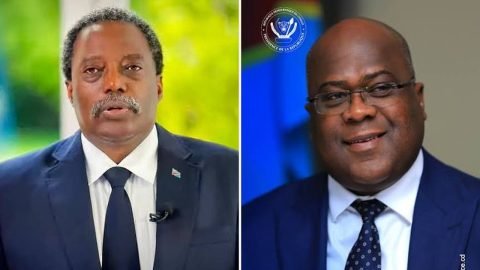

Is Félix Tshisekedi carrying Lumumba's torch?
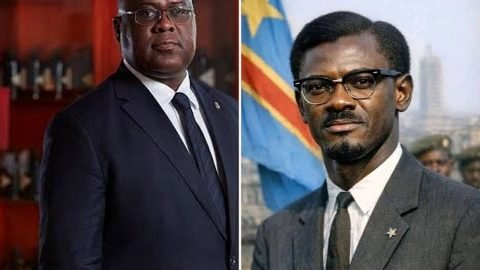
On October 30, 2026, in Moscow, Félix Tshisekedi received an honorary doctorate from the Peoples' Friendship University of Russia, the Patrice Lumumba University. An institution named after the father of Congolese independence, honouring a president who has made sovereignty the defining fight of his term. That same day, at the Kremlin, he called for Rwandan troops to leave Congolese soil. It's no coincidence. It's the thread that runs through Congo's history, from 1960 to 2026.
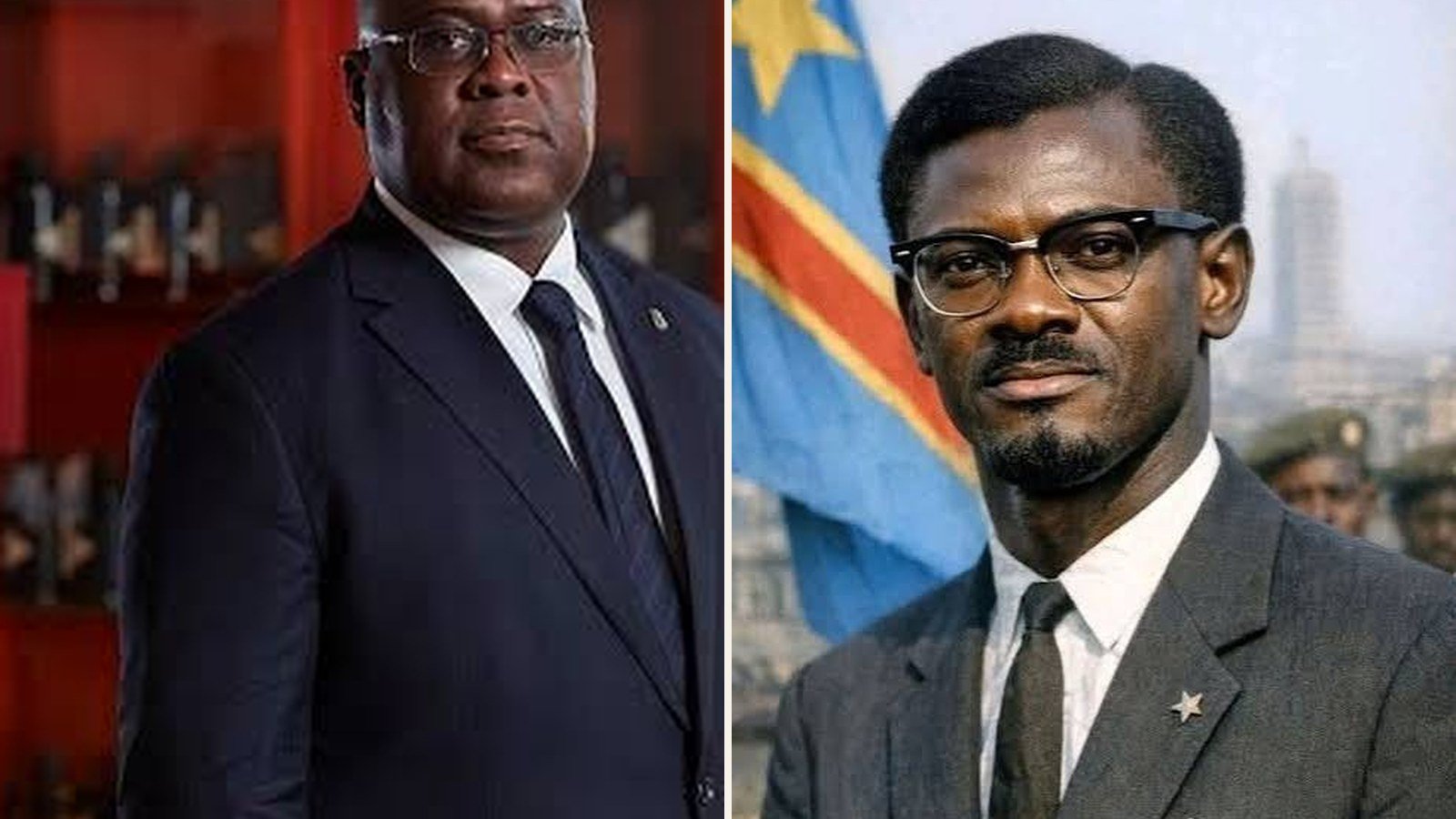

1960: the fight for freedom
On June 30, 1960, at the independence ceremony and in front of the King of the Belgians, Patrice Emery Lumumba, Congo's first Prime Minister, gave the speech that would make him immortal. He wasn't even on the programme. Without mincing words, he laid bare the humiliation, forced labour, insults and beatings of colonial rule. He urged the Congolese to pass on to their children, and to their grandchildren, "the glorious history of our struggle for freedom".
That day, a Congolese spoke with his head held high. The colonial world never forgave him for it.
Six and a half months later, on January 17, 1961, Patrice Lumumba was murdered in Katanga, along with his comrades Maurice Mpolo and Joseph Okito. He was 35. His body was destroyed so that nothing of him would remain. What remained was what mattered most: a dream.
That dream is of a Congo that is free, united, master of its own wealth and destiny, and standing tall in the world.
2026: the fight for sovereignty
Sixty-six years later, the fight has changed shape but not substance. Colonialism is over. But Congo's sovereignty is under attack once again. Part of the national territory is occupied by the M23/RDF, backed by the Rwandan army. Goma and Bukavu are under occupation. Rubaya's coltan is heading for Kigali. And outside interests would once again like to decide, on behalf of the Congolese, what is good for Congo.
Lumumba fought those who wanted to keep Congo under their thumb. Today, the DRC is fighting those who want to carve it up. That is the context in which Félix Tshisekedi is speaking for his country: on the ground, with the army, but also at the UN, in Washington, in Doha and, in October 2026, in Moscow. Everywhere, the same message: the DRC's borders are not up for negotiation.
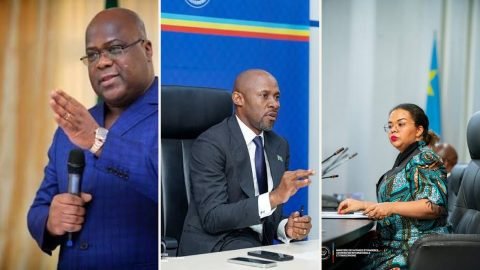
Addressing members of his Sacred Union coalition, he put it this way: "this nation, this country belongs to all of us". And he asked each of them to fight not for him, but for their children and their children's children. Lumumba spoke to the children and grandchildren. Tshisekedi speaks to the children and the children's children. Two men, two eras, one shared concern: the legacy left to the generations to come.
Moscow, October 30, 2026: a symbol and a battle
On the sidelines of the third Russia-Africa summit, held on October 28-29, 2026, the Congolese president received the title and insignia of an honorary doctor from RUDN. The university was founded in 1960, the year Congo won independence, and named after Lumumba in 1961, the year he was killed. It got its name back in March 2023. Some 300 Congolese professionals have studied there. Its rector singled out free primary education in the DRC, one of the landmark reforms of Tshisekedi's presidency, for praise.
In his acceptance speech, Félix Tshisekedi said that receiving the honour from a university bearing Lumumba's name gave it "a special resonance", since that name belongs to the nation's memory.
The same day, at the Kremlin, sitting across from Vladimir Putin, he urged Russia to use its weight to get Rwandan forces out of the DRC. On the one hand, a tribute to Lumumba. On the other, the diplomatic battle for sovereignty. The honour and the diplomacy, the symbol and the fight, all in a single day. Lumumba would have recognised that language.
Politician or statesman?
Félix Tshisekedi likes to draw a line between politicians and statesmen. A politician thinks about the next election. A statesman thinks about the next generation. Running a country isn't about holding office: it's about shouldering a historic responsibility, making tough and unpopular decisions in the nation's higher interest, and accepting history's judgement.
Refusing to sit down with those who took up arms against the Republic. Putting Rwanda's aggression before the whole world when others preferred to look the other way. Pushing the diplomatic fight all the way to US sanctions on the Rwandan army and its financial networks. Making primary school free for millions of children. Those are a statesman's choices.
Statesmen are judged by their actions, their results and the test of time. Lumumba earned his place in history through courage. Félix Tshisekedi's legacy will be measured by what the Congolese have gained: peace, territorial integrity and a stronger Congo. The fight is on. It won't stop.
The bottom line
Lumumba left us the dream of a free Congo. It's up to our generation to turn it into real sovereignty, lasting peace and a future we can be proud of. And defending Congo can't be left to one man: if this nation belongs to all of us, defending it is everyone's responsibility.
Presidents come and go. Congo remains. Congo isn't an inheritance to be spent. It's an inheritance to be protected and handed down.
Timeline
- July 2, 1925: Patrice Emery Lumumba is born (centenary marked in 2025).
- June 30, 1960: independence and Lumumba's speech.
- Jan. 17, 1961: Lumumba murdered, along with Maurice Mpolo and Joseph Okito.
- 1960-1961: the Moscow university is founded, then named after Lumumba; the name is restored in March 2023.
- Oct. 12, 2023: Félix Tshisekedi receives an honorary doctorate from the University of Kinshasa.
- Oct. 28-29, 2026: third Russia-Africa summit in Moscow.
- Oct. 30, 2026: honorary doctorate from RUDN; talks with Vladimir Putin on the withdrawal of Rwandan forces.
Sources. ACP, Oct. 30, 2026, the Moscow honour; Afrik.com, Tshisekedi turns to Putin; Yen.com.gh, the history of RUDN's name; AllAfrica, honorary doctorate from Unikin, 2023; Patrice Lumumba's speech of June 30, 1960.