


"Between a brother and a friend, the choice is clear": the story behind Mobutu's famous line
"Between a brother and a friend, the choice is clear." Coined by Marshal Mobutu Sese Seko, the line became a byword in Kinshasa: when push comes to shove, blood ties trump friendship. But behind the phrase lies a pivotal moment in Zaire's diplomatic history: the break with Israel in 1973, at the height of the Yom Kippur War and in solidarity with the Arab world. More than fifty years on


In Kinshasa, Mobutu's line still gets quoted all the time. It sums up a simple idea: between a brother and a friend, the choice is a no-brainer. Yet its origins run far deeper than that popular reading.
In October 1973, Mobutu's Zaire cut diplomatic ties with Israel. The decision came just days after the Yom Kippur War broke out on October 6, when Egypt and Syria launched an offensive against Israel.
At the time, a wave of African states was turning away from Israel, out of solidarity with the Arab world and support for Palestinian claims. Zaire joined them.
It was against this backdrop that Mobutu set Zaire's friendship with Israel against its claimed brotherhood with Egypt. His phrase captured a diplomatic choice: to put political and historical solidarity with an Arab nation ahead of the relationship with Israel.
Israel and Zaire: a break, then a reconciliation
The 1973 rupture does not mean Mobutu and Israel had no history. The two countries had established diplomatic relations in the early years of Congolese independence.
Nine years later, on May 14, 1982, Zaire formally restored ties with Israel. Mobutu had already floated the idea during a visit to the United States in December 1981.
The thaw opened a new chapter of cooperation. In January 1983, Ariel Sharon, then Israel's defence minister, flew to Zaire. Talks focused on military cooperation and on training and equipping Zairean forces.
The episode is a reminder that international relations are never set in stone. A state can break with a partner in the name of diplomatic solidarity, then mend fences once its priorities and the regional landscape shift.
Morocco: Mobutu's other strategic ally
While Mobutu's line historically points to Egypt, Morocco also loomed large in Zaire's foreign relations.
In 1977, during the first Shaba war, Morocco sent troops to shore up Mobutu's regime against an incursion by the Front for the National Liberation of the Congo. The intervention cemented ties between the two countries.
The rapprochement was part of a broader political and strategic partnership. Zaire, for its part, backed Morocco's position on Western Sahara and opposed recognition of the Sahrawi Arab Democratic Republic within the Organisation of African Unity.
Morocco and Israel do not play the same role in the story behind the phrase. Egypt is the "brother" of 1973, while Morocco emerges as a strategic partner to Mobutu's regime, especially in the years that followed.
From old brotherhoods to today's alliances
More than fifty years on, the Democratic Republic of the Congo operates in a very different geopolitical world. The security crisis in the east, relations with its neighbours and the hunt for diplomatic and security backing now sit at the heart of Congolese foreign policy.
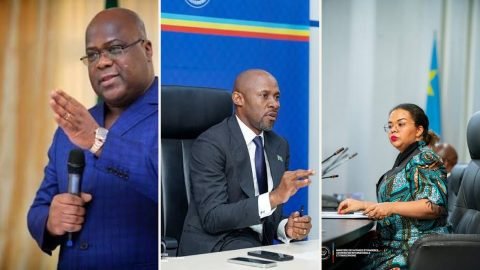
The rapprochement between Kinshasa and Jerusalem is part of that hunt for partners. In September 2026, President Félix Tshisekedi met Prime Minister Benjamin Netanyahu and President Isaac Herzog in Jerusalem. According to the Congolese Presidency, the talks covered security, defence, agriculture, infrastructure, energy and high technology.
The move drew comment and criticism, not least because of the regional context and sharply divided views on relations with Israel. But diplomatic or security cooperation does not automatically mean a country is signing up to fight another nation's war.
For the DRC, the real question is which partnerships can make a concrete difference to its security, the protection of its people and the stability of its territory. That calculation goes beyond notions of historical brotherhood or diplomatic friendship: it is about national interest, what partners actually bring to the table, and what cooperation can deliver.
An old line meets the DRC's new choices
In everyday speech, Mobutu's line has become shorthand for putting blood ties first. Yet the 1973 episode shows it was also rooted in a very specific moment: a war, regional solidarities and hard-nosed diplomatic decisions by a state.
Today, the DRC faces a different question. With the east in crisis, diplomatic choices cannot be judged on history or kinship between peoples alone. They must also be weighed against the country's interests, what partners actually commit to, and whether they can help bring lasting peace.
Mobutu's story is a reminder that friendships and brotherhoods between nations can shape decisions, but they shift with circumstances. For today's DRC, the question is also what kind of alliances it builds and what it can expect to get out of them.
Sources and references
-
Le Monde — May 17, 1982
Zaire restores relations with Israel. -
US Department of State — declassified document
Memorandum of a conversation between Richard Nixon and Mobutu covering Zaire's relations with Israel, the Arab world and African states. -
Jewish Telegraphic Agency — January 20, 1983
Sharon, Mobutu Discuss Military Cooperation Between Israel, Zaire. -
Library of Congress — Zaire: A Country Study
Historical and political study of Zaire, including Mobutu's relations with Morocco and Morocco's intervention in the 1977 Shaba war. -
Presidency of the DRC — September 2026
DRC-Israel cooperation: Kinshasa and Jerusalem strengthen their strategic partnership.
Radar 243 — Inform. Decode. Defend the nation.