


"Never betray Congo": the paradox at the heart of Laurent-Désiré Kabila's legacy
"Never betray Congo." Repeated by Laurent-Désiré Kabila, the phrase has become one of the defining slogans of his political legacy. But behind the call to defend national sovereignty lies a messier story: that of a man who swept to power in 1997 at the head of a coalition propped up militarily by neighbouring countries, chief among them Rwanda and Uganda. Within months, he had fallen out with his former backers. How do we make sense of
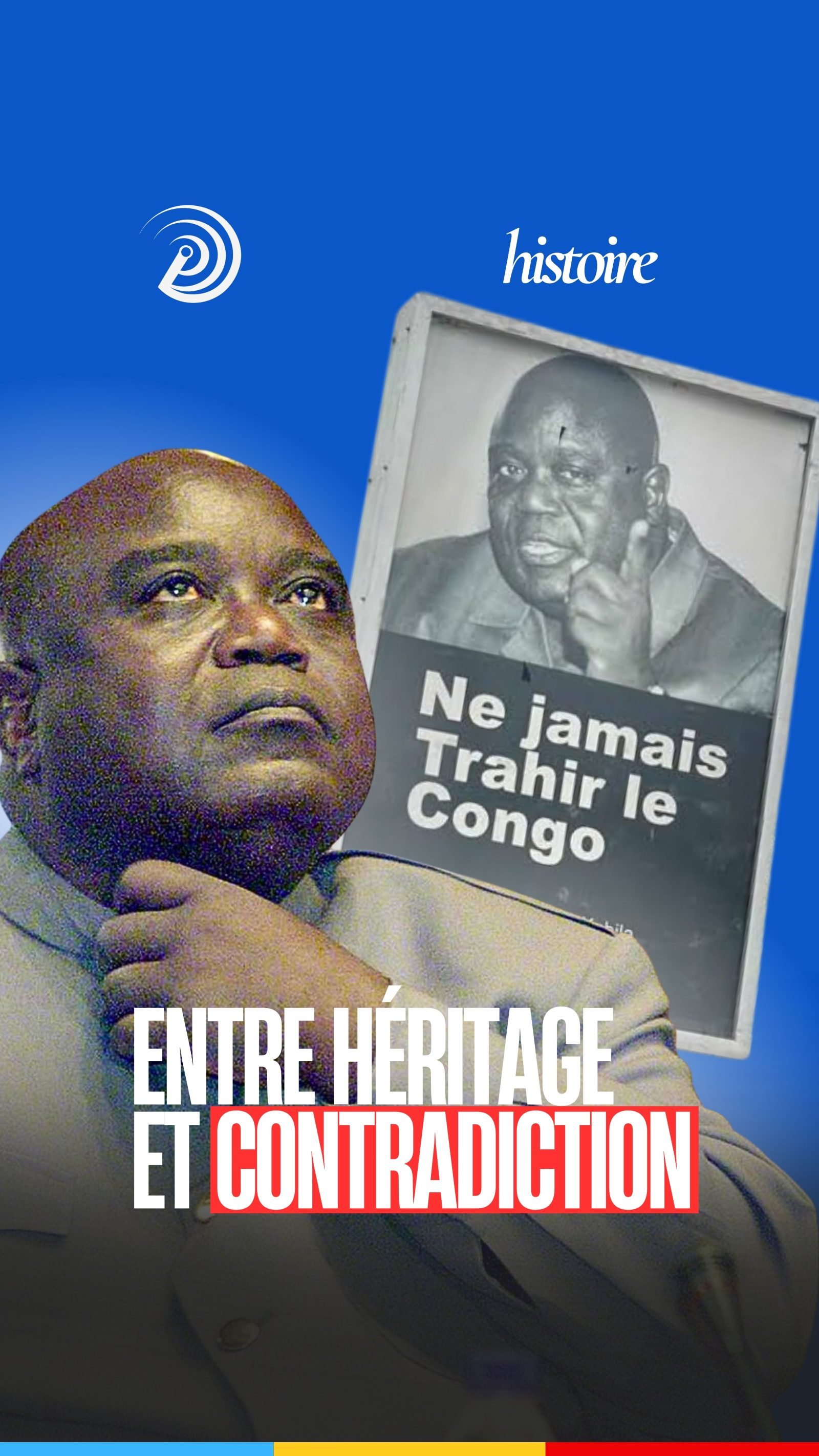

Laurent-Désiré Kabila's slogan is chanted as a patriotic creed, but history delivers a brutal verdict: the man who swore to "never betray Congo" is the very man who threw open the nation's doors to the invaders from the east. By striking a deal with Rwanda and Uganda to take Kinshasa, he mortgaged the country's sovereignty and sold out the security of its land. The war tearing the east apart today is no accident of history. It is the direct consequence of that original act of high treason.
1996-1997: the AFDL, a Trojan horse for foreign armies
It is time to expose the great con of modern Congolese history. In October 1996, under the banner of the Alliance of Democratic Forces for the Liberation of Congo-Zaire (AFDL), Laurent-Désiré Kabila did not come as a liberator. He came as the Congolese front man for a methodical foreign invasion.
To fulfil his personal ambition of toppling Mobutu, Kabila agreed to provide cover for Kigali and Kampala. Rwandan and Ugandan troops did not merely "support" a rebellion: they crossed, occupied and bloodied Zairean territory all the way from the east to Kinshasa in May 1997. By installing a regime kept on life support by occupying armies, Kabila sacrificed the country's territorial integrity on the altar of his own power grab.
Shady promises and a land sell-off: the blood price
Alliances with predators never come free. To get Kigali's guns, men and logistics, Kabila signed up to toxic commitments that Congolese are still paying for in blood.
Behind the march on Kinshasa lay backroom deals: the promise of free rein for neighbouring regimes in eastern Congo and the country's security apparatus placed under foreign tutelage. By letting foreign commanders infiltrate the Congolese army and effectively handing his sponsors strategic control of the eastern provinces, Kabila laid the groundwork for today's ordeal. What was dressed up as political strategy was, in reality, a criminal sell-out of the homeland.
The 1998 split: a sorcerer's apprentice wakes up too late
When, in July 1998, Laurent-Désiré Kabila realised he had become a vassal of his own sponsors and tried to send the Rwandan troops packing, the trap he had helped set slammed shut on Congo.
His former allies struck back fast: the second Congo war erupted almost immediately, a swarm of proxy armed groups sprang up, and the east fell under brutal occupation. By opening the Pandora's box of foreign intervention in 1996, Kabila gave regional predators a licence to operate on Congolese soil. The never-ending war, the massacres of civilians, the plunder of our minerals and the humanitarian catastrophe still unfolding in the east are the direct legacy of that original betrayal.
A legacy stained with blood: facing up to the betrayal
How can anyone preach "never betray Congo" when his entire rise to power was built on a pact with the nation's historic enemies? You cannot claim to defend a country's sovereignty after handing its keys and its borders to foreign armies.
The Congolese people must stop falling for empty slogans. Today, "Never betray Congo" rings like an insult to the memory of the millions of victims in the east. History must judge deeds, not words: by letting the wolf into the fold to seize power in Kinshasa, Laurent-Désiré Kabila committed the ultimate betrayal, and the Republic is still paying for it.
Historical sources and references
-
Human Rights Watch — 1997
What Kabila Is Hiding: Civilian Killings and Impunity in Congo. Report on the AFDL's military campaign, the destructive role of Rwandan forces and the abuses committed. -
Human Rights Watch / International Federation for Human Rights — 1997
Zaire: The Human Rights Situation and the Role of the International Community. Analysis of the Rwandan and Ugandan invasion under the cover of the AFDL. -
Council on Foreign Relations
Eastern Congo: A Legacy of Intervention. Timeline of the 1996 regional invasion and the security spiral in eastern Congo. -
Congressional Research Service — 2001
Congo (formerly Zaire). Official report on Rwandan infiltration of the state and the unravelling of Kabila's alliances. -
Oxford Academic — African Affairs
Status competition in Africa: Explaining the Rwandan–Ugandan clashes in the DRC. Study of the plunder and clashes of foreign occupying armies on Congolese soil. -
Congolese Press Agency (ACP) — January 15, 2025
24 years after the assassination of Mzee Kabila: "Never betray Congo", revisiting the slogan and the debate over his political legacy.
Radar 243 — Inform. Decode. Defend the nation.