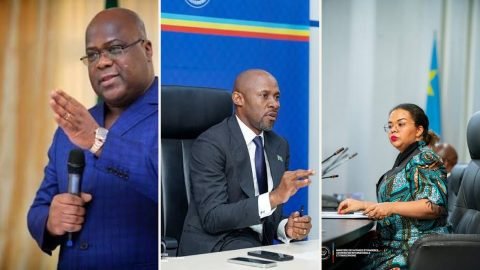
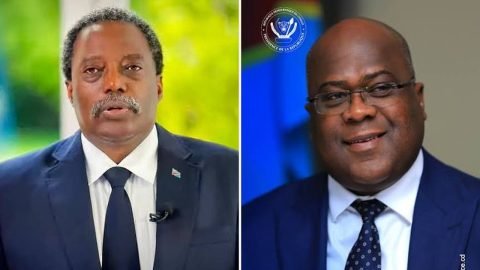

Schools report card: Kabila's 18 years vs. Tshisekedi's seven
Joseph Kabila says "the country is in peril". But you can also ruin a country by failing its children. For eighteen years he had every lever of power to build Congo's schools, and he didn't. In seven years, Félix Tshisekedi has put millions of children into classrooms. Radar 243 compares the two records, using World Bank figures.
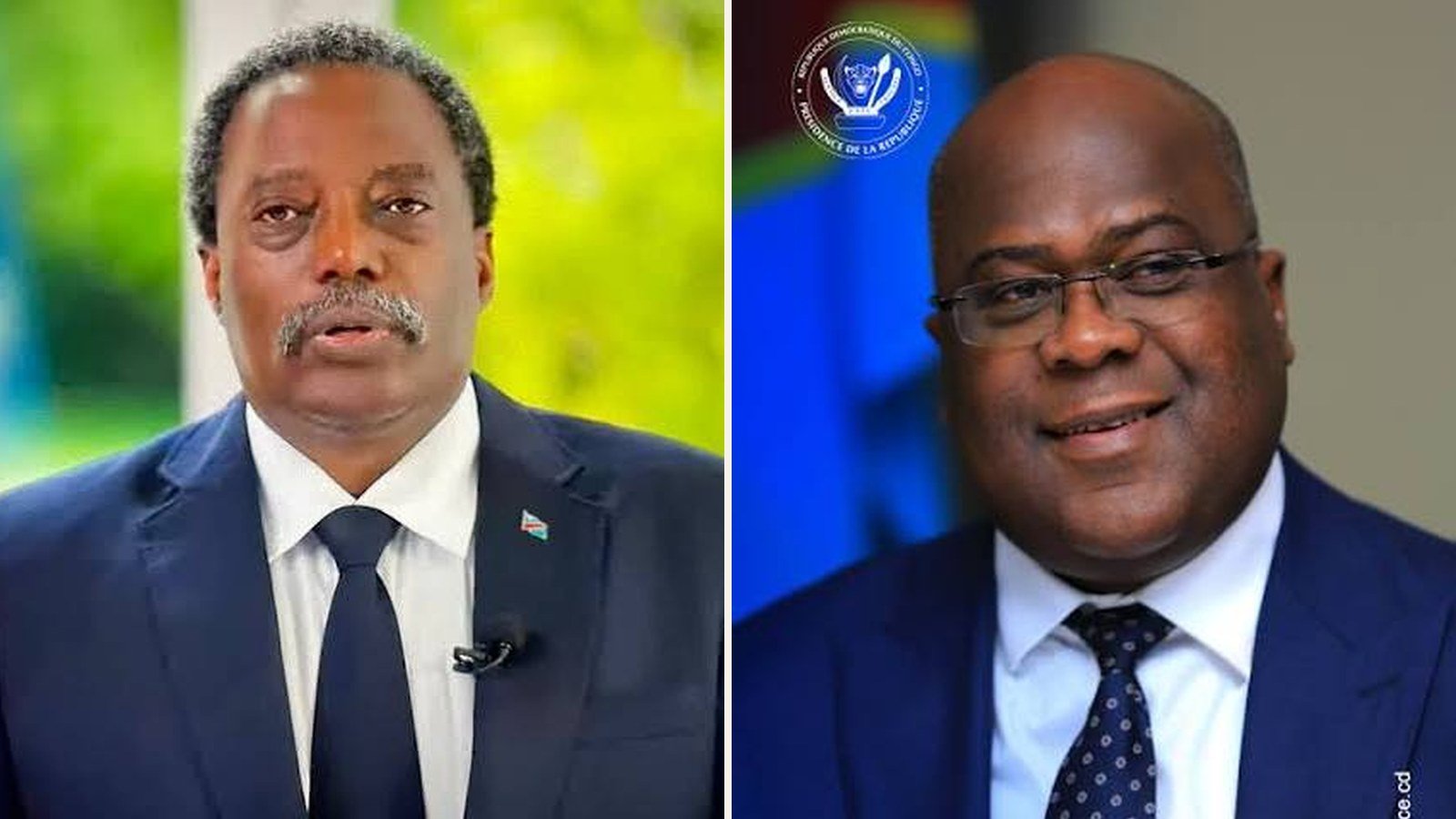

Schools: the real test of any government
A leader can promise peace, prosperity and sovereignty. But there is one area where talk is cheap: schools. A child is either in class or not. A teacher is either paid or not. A university either has lecture halls or it's falling apart. That's why a government's education record is the truest measure of its worth. And on that score, Joseph Kabila's eighteen years speak for themselves.
1. Free schooling: promised under Kabila, delivered under Tshisekedi
Free primary education is enshrined in the 2006 Constitution, which Joseph Kabila himself signed into law. A free-schooling policy was announced in 2010. On paper, everything was in place. In practice, nothing changed for families.
As late as 2019, according to the World Bank, the DRC was still one of the few countries in the world where state primary schooling wasn't free. Four million primary-age children were out of school. An evaluation by the French Development Agency found that fees charged to parents had fallen "little or not at all". Families paid teachers' "top-up" bonuses, running costs and exam fees. The poorest simply kept their children at home.
In September 2019, a few months after taking office, Félix Tshisekedi rolled out free schooling nationwide. The result, again according to the World Bank: by 2022-23, nearly 4 million more pupils were enrolled in state primary schools than in 2017-18. According to the ministry, primary enrolment has climbed from 14.7 million in 2019 to more than 22 million in 2026.
Challenges remain: overcrowded classrooms, teachers who deserve better pay, hidden fees in some schools. But the difference is stark. One wrote free schooling into law and let it gather dust for nine years. The other brought it into the classroom in his first year.
2. New schools: where's the eighteen-year record?
How many new schools did Joseph Kabila build in eighteen years in power? We looked. There is no public, verifiable national record for 2001-2019. No list, no map, no figures. For a government that lasted almost two decades, that silence says it all.
Under Félix Tshisekedi, the Local Development Programme for the 145 Territories (PDL-145T) is building schools, health centres and administrative buildings even in the most remote territories, through BCECO, UNDP and CFEF. At the midterm review in November 2023, the planning minister reported 178 schools already handed over, more under construction and 60,000 direct jobs created. Alongside this, the World Bank is funding new and better-equipped classrooms (PEQIP project, 2024).
These are schools you can visit, photograph and count. For the first time, a state programme is reaching all 145 territories, not just Kinshasa and the provincial capitals.
3. Universities: from neglect to rebuilding
Congolese students spent years studying in buildings that were falling apart: packed lecture halls, empty libraries, labs with no equipment. Kinshasa's National Pedagogical University (UPN) is the example everyone remembers: buildings left to rot for years under the nose of a government that didn't care.
Since 2019, construction and renovation projects have been launched at several institutions, including the UPN, the University of Kinshasa and universities in the provinces (Mbuji-Mayi, Kananga and Bunia, with Kolwezi under construction). Training the next generation of leaders takes buildings, equipment and teachers. You can't prepare a country's future in classrooms where the roof leaks.
4. Merit scholarships: rewarding excellence
Under Joseph Kabila, there was never a major national scholarship programme for top students. High achievers in the State Exam got a pat on the back, rarely any real support.
In 2019, First Lady Denise Nyakeru Tshisekedi's foundation launched Excellentia, which pays for the top State Exam graduates to study in the DRC and abroad (France, Morocco, the United States). By 2024, the programme had 313 scholars. On October 24, 2025, it became a national, state-funded programme. On July 28, 2026, the first national round rewarded 185 laureates from all 26 provinces.
It sends a message to every young Congolese: hard work pays off and excellence gets recognised, wherever you come from.
5. The Kuluna gangs: kill them or give them a future
In November 2013, after Joseph Kabila publicly vowed to stamp out urban gangs, the police launched Operation Likofi ("punch") in Kinshasa. The toll documented by Human Rights Watch: at least 51 young men and boys killed without trial and 33 disappeared between November 2013 and February 2014. Many were dragged from their homes at night by masked police officers and executed. The real toll is almost certainly higher.
That was Joseph Kabila's answer to Kinshasa's lost youth: extrajudicial executions. Not one senior official was ever brought to trial.
Under Félix Tshisekedi, the approach is different. The National Service trains idle young people, including former Kuluna, in a trade and puts them to work on projects that benefit the country: farming, construction, maintenance. Punishment alone isn't enough. Young people need skills and jobs. A young man who learns a trade doesn't go back to the streets.
6. Why this record matters now
Joseph Kabila now casts himself as the saviour of a country "in peril". Since October 12, 2026, he has been running the M23/RDF from Goma. He promises Congolese a better future. But a country's future is its children. And for eighteen years, those children paid for schooling he had declared free, studied in universities he let collapse and, in some cases, died at the hands of a police force under his command.
Numbers don't lie. Speeches do.
The bottom line
Not everything is perfect: there are still schools to build, teachers who deserve better and universities to modernise. But the facts are clear. In seven years: free schooling delivered, millions more children in class, schools in all 145 territories, a national scholarship scheme and a youth reintegration policy. In eighteen years: free schooling that never left the page, no record of schools built, and a deadly police crackdown. Can you claim to defend a country's future when you never invested in its children? You be the judge, defenders of the nation.
Schools by the numbers
- 2006: the Constitution guarantees free primary schooling. 2010: free-schooling policy announced, never implemented.
- Nov. 2013-Feb. 2014: Operation Likofi, at least 51 killed and 33 disappeared (HRW).
- 2019: 4 million primary-age children out of school (World Bank).
- Sept. 2019: free schooling rolled out nationwide. Excellentia launched.
- 2022-23: nearly 4 million more pupils in state primary schools than in 2017-18.
- Nov. 2023: 178 PDL-145T schools handed over (midterm review).
- Oct. 24, 2025: Excellentia becomes a national programme.
- 2026: more than 22 million primary pupils (ministry figures).
Sources. World Bank blog on free schooling; World Bank, June 2020; World Bank, PEQIP project, Feb. 2024; AllAfrica, 2026 enrolment; UNDP, PDL-145T review; HRW, Operation Likofi; ACP, Excellentia 2026; AllAfrica, Excellentia goes national.