


Kagame's playbook: 13 tactics Rwanda uses to wage war on the DRC
Wars aren't won on the battlefield alone. They're fought in institutions, in the media, in diplomacy and in people's minds. For thirty years, Paul Kagame's Rwanda has run the same well-oiled playbook against Congo: the costume changes, the logic never does. To beat an aggressor, you have to know its moves. Radar 243 has identified thirteen, across four fronts, each backed by an example you can check.

Front 1: give the war a Congolese face
1. Put a Congolese face on the rebellionThis is the founding move. Put Congolese at the head of an armed movement that is funded and commanded from abroad, so it looks like an internal Congolese affair. In 1996, it was Laurent-Désiré Kabila's AFDL. In 1998, the RCD. In 2006, the CNDP. In 2012, the M23. In 2023, Corneille Nangaa's AFC.
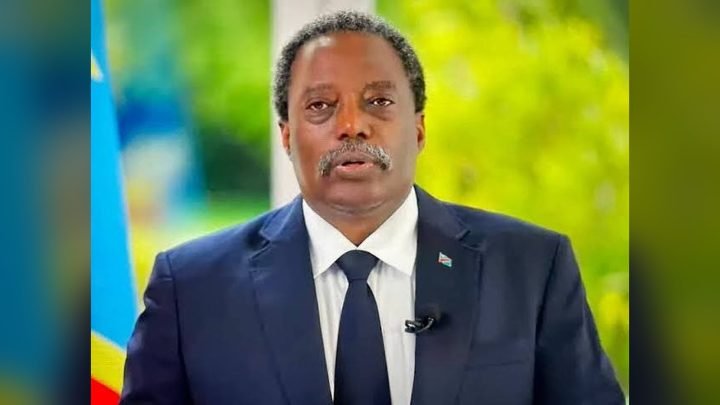
The latest chapter is the most telling: on October 12, 2026, the M23/RDF installed a former Congolese head of state, Joseph Kabila, as its leader. Meanwhile, the UN estimates that 6,000 to 7,000 Rwandan troops are still in the Kivus. The face is Congolese. The guns, the orders and the profits are not.
2. Build a Congolese political frontA figurehead isn't enough. You need spokesmen, cadres and press releases. The AFC/M23 parades Corneille Nangaa, the former head of the electoral commission, Bertrand Bisimwa, Lawrence Kanyuka and other Congolese figures. They talk about "governance", "liberation" and a "new Congo".
The goal is to wrap a national narrative around a movement whose Rwandan backing has been documented by the UN and admitted by Kigali itself in January 2026. Political movements don't seize cities with armed drones and air defence systems that no country in Central Africa manufactures.
3. Pose as a community's protectorKigali invokes the safety of Congolese Tutsis, the Banyamulenge in particular. Let's be clear: the Banyamulenge are Congolese. Protecting them is the job of the Congolese state, just as it is for every citizen from Kongo-Central to Haut-Uélé.
The discrimination and violence they face must be fought, firmly. But they can never justify a foreign army setting up camp on our soil. A country that claims to protect a community by occupying the land it lives on isn't protecting it. It's putting it in harm's way, and using it.
Front 2: justify the unjustifiable
4. Inflate the security threatThe FDLR numbered around 1,000 fighters in early 2025, according to the UN, and their last deadly raid into Rwanda was in 2019. Yet they remain Kigali's go-to argument, just as in 1996 and 1998. (See our piece "The FDLR: Rwanda's all-purpose excuse".)
An inflated threat serves a purpose: it justifies a permanent presence. No country's security concerns give it the right to trample its neighbour's sovereignty.
5. Regionalise the conflictFrame the crisis in the east as a "regional" problem (refugees, borders, armed groups, cross-border communities) so Rwanda's demands take centre stage at every negotiation. Nairobi, Luanda, Doha, Washington: at every table, Kigali turns up with its list of conditions.
Let's never lose sight of the basics. The occupied land is Congolese. The plundered mines are Congolese. The dead and the displaced are Congolese. This is not a regional conflict. It is an act of aggression against the DRC.
6. Deny, deny, denyOn March 15, 2025, Rwanda's foreign minister insisted that Rwanda had "no troops on Congolese soil". On January 22, 2026, Rwanda's ambassador in Washington admitted to "security coordination with the AFC/M23". In between, the UN, Washington and Brussels documented everything Kigali denied.
Denial isn't a communications failure. It's a strategy: it buys time. While the world argues over whether the troops exist, the troops keep advancing. (See "Olivier Nduhungirehe vs. the facts".)
Front 3: impose it by force
7. Grab land, then negotiate from strengthSeize cities, squeeze Kinshasa, then come to the table holding the military high ground. Goma in January 2025, Bukavu in February, Uvira on December 10, 2025, just six days after the Washington accords were signed. Every signature is followed by an offensive. Every offensive drives up the price of peace.
Military conquest cannot become a shortcut to political power. Accept that logic and you reward aggression.
8. Infiltrate the army: "brassage" and "mixage"For years, folding rebels into the FARDC served as a Trojan horse. "Brassage" mixed fighters from different groups into the army. "Mixage", negotiated with the CNDP in 2007, let rebels join the army while keeping their own chains of command. In 2009, the March 23 agreements brought the CNDP in wholesale, ranks and loyalties intact. We know how that story ended: officers feeding intelligence to the enemy, mutinies, and then, in 2012, the M23, born precisely out of those integrated former CNDP men.
On November 28, 2025, addressing the Congolese diaspora in Serbia days before the signing in Washington, President Félix Tshisekedi drew a red line: "there will be no more brassage or mixage". Everyone's background and conduct will be vetted. Our army must remain national and loyal to the Republic.
9. Rule by fearIn the occupied zones, the fact-finding mission of the UN human rights office (September 2025) and the Group of Experts document summary executions, disappearances, arbitrary arrests, forced recruitment and a crackdown on civil society. Journalists go quiet, activists flee, traditional chiefs are replaced.
The message is simple: keep your head down and do as you're told. Fear is a weapon of war. It must never become a reason to give up your rights.
Front 4: the battle for hearts and minds
10. Win the narrative warPress releases, interviews, op-eds, lobbyists, embassies: an aggressor doesn't just want to win ground, it wants to convince the world it's in the right. For years, much of the international press painted Rwanda as a development success story and Congo as a basket case. That narrative shielded Kigali.
If we don't tell our own story, someone else will tell it for us. That is why Radar 243 exists.
11. Soft power: hide aggression behind a marketing campaignArsenal, PSG, Bayern, Atlético, the Basketball Africa League, Formula 1: "Visit Rwanda" is everywhere. Some of the showcases have cracked: the Arsenal deal ends in 2026, and the army's club was pulled out of the BAL after US sanctions. Others are still opening: on October 13, 2026, Formula 1 signed a ten-year deal for an African Grand Prix "presented by Visit Rwanda", pencilled in for the early 2030s.
All this marketing has one aim: to make the world think of Rwanda and picture stadiums and racetracks, not the mines of Rubaya. That's exactly why Congo's voice has to be heard. No amount of marketing can wipe out what is happening in the Kivus.
12. Smear the head of stateEroding trust between a people and its leaders weakens a country at war. In July 2025, Belgian lawyers, including Bernard Maingain, filed a complaint in Brussels on behalf of NGOs from Katanga targeting nine people close to Félix Tshisekedi. On October 14, 2026, raids took place in Belgium.
Let's stick to the facts: the president himself is not targeted, being named in a complaint is not the same as being charged, and no findings have been made public. The timing, in the middle of a war and two days after Kabila turned up in Goma, is no coincidence. Let the courts do their job. Manipulating public opinion is another matter entirely.
13. Exploit our divisionsA divided country is a vulnerable country. Political rivalries, community tensions, hate speech, opposition figures who won't condemn the aggressor: all of it can be exploited from outside.
We can vote differently and oppose each other politically. That's democracy. But on national sovereignty, the red line must be shared by all. Anyone who plays into the aggressor's hands to win a domestic political fight loses everything, and drags the country down with them. Congo is bigger than any one person's ambitions.
The bottom line
This war is fought with guns, but also with acronyms, press releases, sponsorship deals and rumours. The thirteen tactics fit together: give it a Congolese face, justify it, seize ground, control the story. Our response has to be just as comprehensive: strengthen the army, protect our institutions, fight disinformation and stay united. Check the facts, demand evidence, learn to spot the tactics. Congo is not for sale. Congo will not be carved up.
The 13 tactics at a glance
- A Congolese face: front men, a political façade, the "protector" of a community.
- Justify: the FDLR threat, regionalisation, denial.
- Impose: grab land to negotiate, brassage and mixage, terror.
- Hearts and minds: the narrative, soft power, smearing the head of state, divisions.
Sources. Experts' report S/2025/446; Ambassador Mukantabana's statement, Jan. 22, 2026; Actualite.cd, Tshisekedi in Serbia; VRT, raids in Belgium; Motor Sport Magazine, the F1-Rwanda deal; RFI via Dakaractu, Oct. 12, 2026.