

The C64: quick to attack the government, slow to condemn Kabila
Since it was founded in May 2026, the Article 64 Coalition has fired back within hours at every government decision: statements, shutdown strikes, marches, ultimatums. But when Joseph Kabila, whom it wanted at the dialogue table, took command of the M23/RDF on October 12, 2026, it took two full weeks to say anything. And when it finally spoke, it was to reach out to him. A coalition named after the constitutional article against seizing power by force, going easy on the man who took up arms: Radar 243 exposes the double standard.
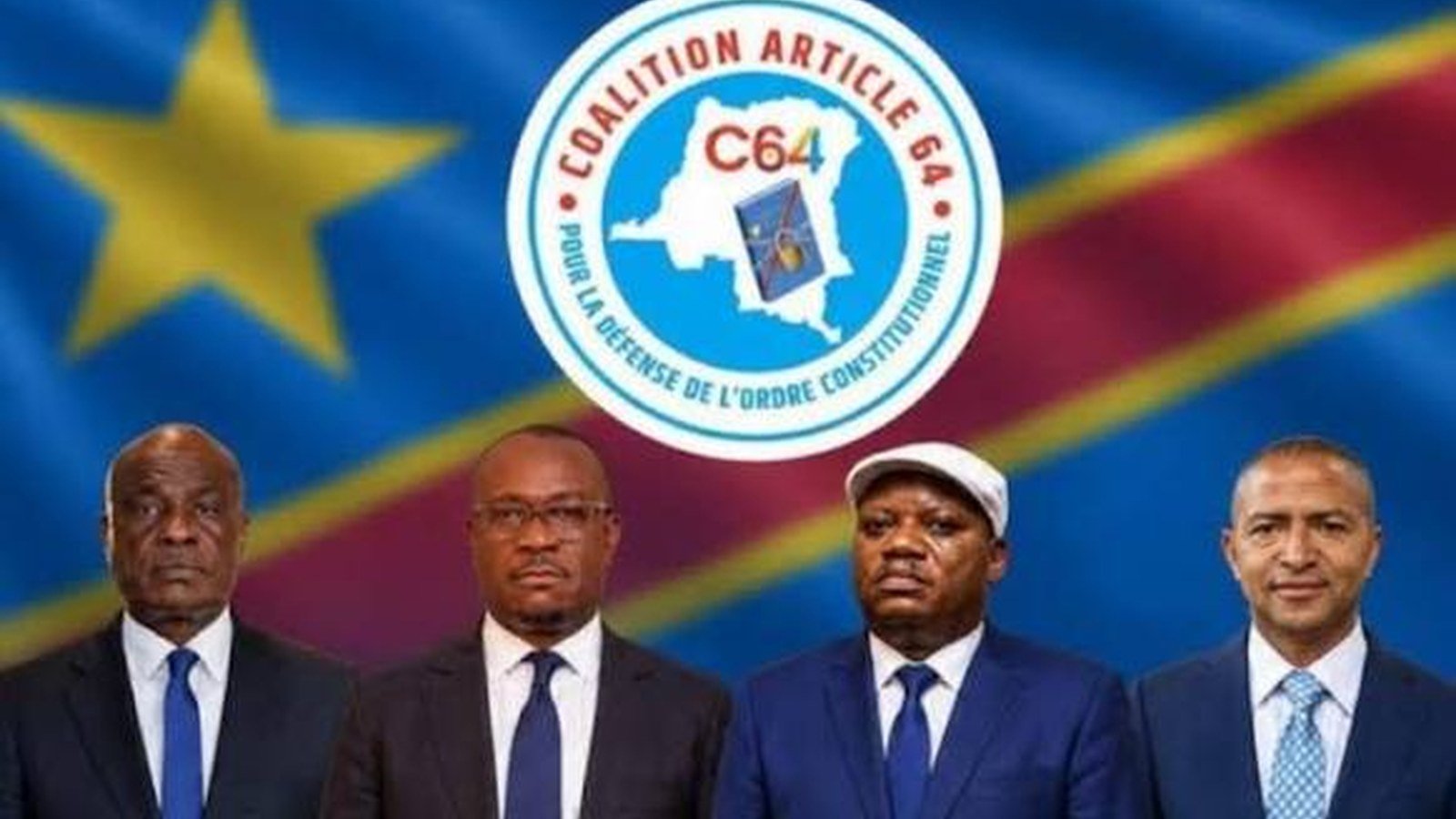

What is the C64?
The "Article 64 Coalition for the Defence of Constitutional Order" was launched in May 2026 to fight plans to revise the Constitution. Its name is its manifesto. Article 64 of the Constitution places a duty on every Congolese to thwart anyone who seizes power by force or wields it in breach of the Constitution.
It brings together five opposition heavyweights: Martin Fayulu, Moïse Katumbi, Jean-Marc Kabund, Augustin Matata Ponyo and Delly Sesanga. On May 21, 2026, Joseph Kabila's "Save the DRC" movement publicly welcomed its creation and urged it to go further. So the C64's first public endorsement came from the Kabila camp. Keep that in mind.
Criticising the government is a right. A strong opposition is vital to democracy. That's not the issue. The issue is: who does the C64 actually use Article 64 against?
A coalition that never misses a beat…
Since May, the C64 has been relentless. A shutdown strike on June 3. Protests. Statements on July 20 and 29. An ultimatum on August 15. A march in Kinshasa on September 15. Every government announcement gets a response within hours, sometimes within minutes on social media.
On May 28, 2026, Delly Sesanga vowed to "take on this regime with our bare hands and wrestle it to the ground". In June, he again urged the people to invoke Article 64 to "bring this regime down". Against an elected president, in a debate about the Constitution, the coalition has never been short of words or slow off the mark.
…except when it comes to Kabila
On October 12, 2026, in occupied Goma, a former President of the Republic formally took command of a politico-military movement that holds part of the national territory with the backing of a foreign army. If Article 64 means anything, it means this. Seizing power by force is the very definition of what the M23/RDF is doing. For a coalition bearing that name, it was now or never.
What happened? Nothing. For two weeks: no joint position, no emergency meeting, no press conference, no shutdown strike against the occupation, no march for Goma. Not a word from Sesanga about "wrestling to the ground" the men opening fire on the Republic. The Congolese press called it an "awkward silence". It was, above all, deafening.
Two weeks. For a coalition that responds within hours to every government move, two weeks of silence while a former president defects to the aggressor isn't a delay. It's a choice.
Rome, October 27: a half-hearted condemnation
On October 27, 2026, after a conclave in Rome, far from Kinshasa and even further from Goma, the C64 finally issued a statement. It rejected both the constitutional revision and armed struggle. It took two weeks and a trip to Italy to write a sentence any patriot would have said on the evening of October 12.
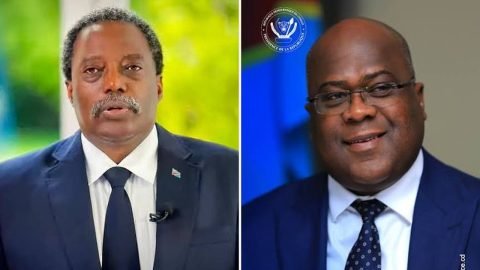
And in the very same statement, the coalition announced it wanted to meet Félix Tshisekedi and Joseph Kabila separately to prepare an "inclusive national dialogue".
Read that again. The C64 is putting the elected President of the Republic and the leader of a Rwanda-backed armed rebellion on the same footing. Two interlocutors, two meetings, equal standing. The head of state on one side, the warlord on the other, treated as equals.
This is no slip of the pen. Back in August, Martin Fayulu was already calling for Joseph Kabila and Corneille Nangaa, coordinator of the AFC/M23, to take part in the national dialogue. The line is consistent: bring the M23/RDF's leaders to the nation's table.
How can you claim to defend constitutional order and demand a seat at the dialogue for Joseph Kabila without first demanding he lay down his weapons? How can you condemn "armed struggle" and, on the same page, offer to go and negotiate with the man waging it?
What Article 64 actually says
Article 64 doesn't say: thwart the sitting president. It says: thwart "anyone who seizes power by force". There's no exemption for former presidents. No exemption for former allies. No exemption for the man whose movement cheered your launch.
A debate about the Constitution is settled with words, votes and institutions. A war waged with a neighbouring country's army is a different matter altogether. Confusing the two guts Article 64 of its meaning.
The bottom line
We're not asking the C64 to back Félix Tshisekedi. We're asking it to live up to its own name. Hitting back at the government within hours, keeping quiet for two weeks about Kabila, then condemning the rebellion half-heartedly before offering to sit down with its leader: that isn't defending constitutional order. It's sidestepping it.
People notice what gets said. They also notice what doesn't. The DRC is bigger than Kabila, bigger than Tshisekedi, bigger than the C64. When the homeland is under attack, patriotism doesn't take sides.
Timeline
- May 19-21, 2026: the C64 is launched; Kabila's "Save the DRC" welcomes it.
- May 28, 2026: Delly Sesanga vows to "wrestle this regime to the ground".
- June 3, 2026: first shutdown strike.
- Aug. 2026: Fayulu calls for Kabila and Nangaa to join the dialogue.
- Sept. 15, 2026: C64 march in Kinshasa.
- Oct. 12, 2026: Kabila takes command of the M23/RDF. The C64 stays silent for two weeks.
- Oct. 26-27, 2026: Rome conclave; armed struggle rejected, but an offer to meet Kabila.
Sources. Actualite.cd, Sesanga, May 28, 2026; Ground News / Actualite.cd, Save the DRC welcomes the C64; Afrik.com, the C64 leaders' silence; Afrik.com, the Rome statement; Koaci, Oct. 28, 2026; The New Times, on the C64 statement.