

Joseph Kabila's address to the nation: reading between the lines
On October 9, 2026, from an undisclosed location, Joseph Kabila addressed the Congolese people in a message titled "The country is in peril: to stand by is to be complicit". Three days later, he resurfaced in occupied Goma at the head of the M23/RDF. It was never a call to the nation. It was a declaration of war on it. Radar 243 takes the message apart line by line and holds it up against its author's eighteen years in power.
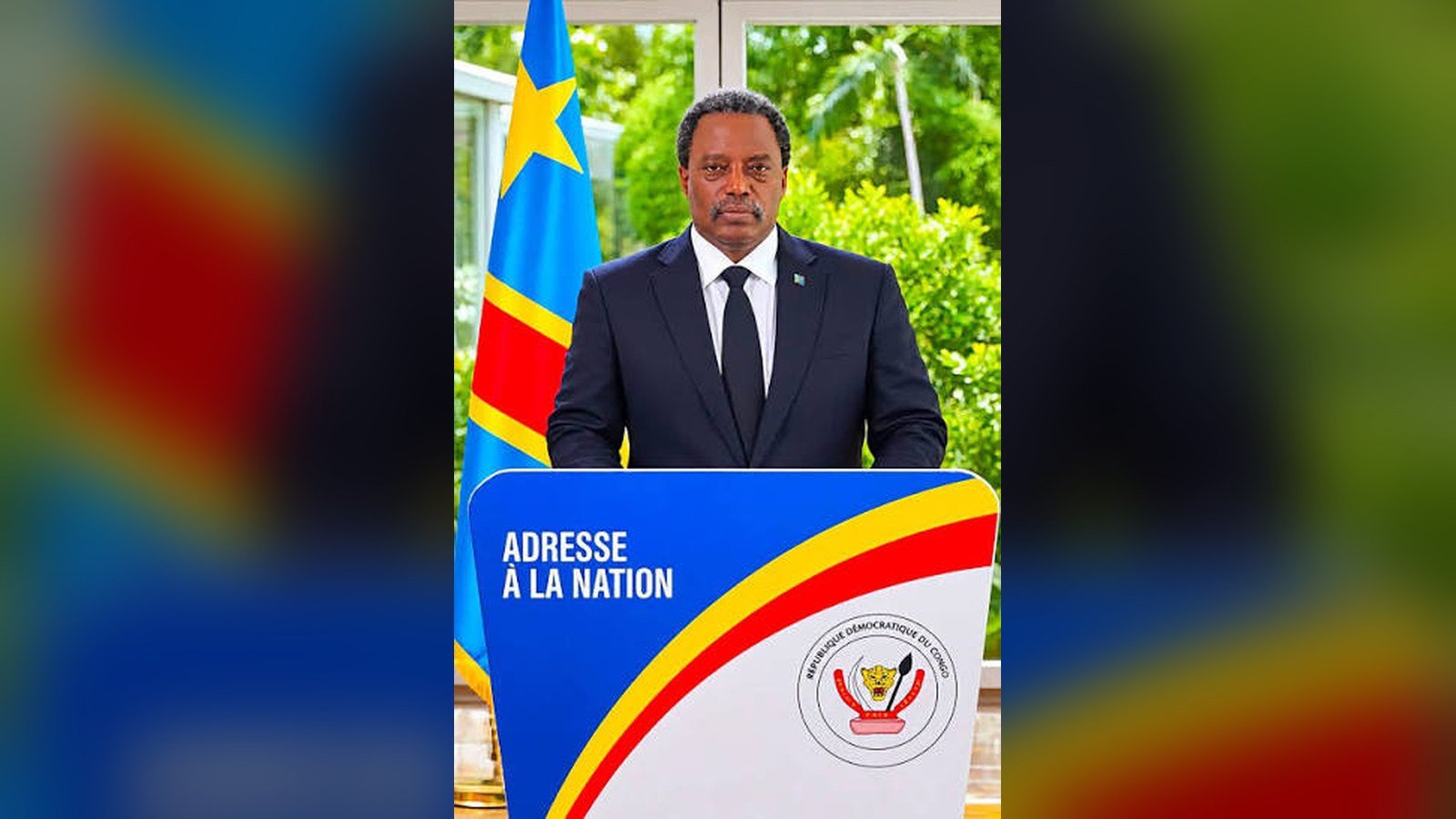

The message, and the word that's missing
The text was released on social media. In it, Joseph Kabila paints a picture of a country on the brink, without once naming his successor. He accuses the government of choosing war over peace. He denounces violations of the Doha ceasefire, alleged collusion between the army, the Wazalendo and the FDLR, arrests of officers and corruption. He warns against the mining partnership signed with the United States. He concludes that "Congo is in peril" and promises more to come.
One word is missing from the entire speech: M23. Not one word of condemnation. Not a line about the Rwandan army, whose presence in both Kivus has been documented by UN experts and sanctioned by Washington. Not a word for the millions displaced, for the families of Goma, Bukavu and Uvira. A former president who talks about "peril" without naming the aggressor hasn't misread the situation. He has picked his side.
Government spokesman Patrick Muyaya hit back the same day: the former president belongs to the past and has nothing to offer but chaos. Within three days, events had proved him right.
Three days later: Goma
On October 12, 2026, Joseph Kabila appeared in Goma, at his own residence, at the head of the M23/RDF. At his side: Corneille Nangaa, Bertrand Bisimwa and Sultani Makenga. The same Makenga the Congolese army drove out of Bunagana in November 2013. The same movement Kabila claimed to have defeated.
So that's what the address to the nation really was: a warm-up act. You don't condemn a movement you're about to lead. You don't name the aggressor when you're about to sit at his table. The silence of October 9 was explained on October 12.
1. "The country is in peril": and who left it that way?
Joseph Kabila ran the DRC from January 2001 to January 2019. Eighteen years. Every institution, the entire army, all the security services and every revenue agency were in his hands. If there is one man who cannot suddenly discover that the country is in peril, it's him.
Congolese remember. Power cuts, even in Kinshasa. National highways left to crumble. Hospitals without equipment. Teachers paid late, if at all. The internet shut down at the first sign of protest. And above all, elections put off: his second term ran out in December 2016, yet he clung on until January 2019. Two years of "slippage", bought by cracking down on people who were simply asking for the Constitution to be respected.
The man who left the country in that state is in no position to lecture anyone on governance. He has a record to answer for.
2. "I left behind a strong army": the facts say otherwise
Under Joseph Kabila, soldiers were underpaid, badly equipped and sometimes reduced to begging at checkpoints. The chain of command was riddled with officers from one rebellion after another, absorbed wholesale with every peace deal. The policies known as "brassage" and "mixage" brought into Congo's army men whose loyalties lay elsewhere.
We all know how that ended. In November 2012, on his watch, the M23 took Goma. A provincial capital of more than a million people fell to a Kigali-backed rebellion. It took the UN's Force Intervention Brigade to drive the movement out in late 2013. And instead of dismantling it, Kinshasa signed declarations in Nairobi that left its leaders free in Uganda and Rwanda. Those same leaders came back in 2021.
One fact deserves a reminder. From 2008 (Security Council resolution 1807), every arms delivery to Congo's army had to be notified in advance to the UN sanctions committee. That constraint hobbled the country's ability to equip itself for the rest of the Kabila years. It was lifted unanimously on December 20, 2022, by resolution 2667. Under Félix Tshisekedi.
3. "Those in power are lining their pockets": is he talking about himself?
Joseph Kabila accuses his successors of corruption. That takes some nerve. In November 2021, the Congo Hold-up investigation, carried out by 19 media outlets and 5 NGOs in 18 countries and based on 3.5 million bank records, found that the Kabila family and its inner circle siphoned off at least 138 million dollars in public money between 2013 and 2018. The channel: BGFI Bank DRC, then run by his adoptive brother. A judicial inquiry was opened in Kinshasa. His entourage cried "fake accusations". The documents are still there.
And since we're talking about wealth: how were the Kingakati estate in N'Sele, its upgrades, its security and its farms paid for? On what salary? Anyone who wants to talk about the Congolese people's money should start by accounting for his own.
4. "Officers arbitrarily arrested": justice is not impunity
Joseph Kabila is outraged at the arrests of officers. Defendants' rights must be respected, of course. But a country at war has a duty to put on trial those who betray it, feed intelligence to the enemy or abandon their posts. That's what defending the nation means.
The former president himself has been tried. In September 2025, the High Military Court sentenced him to death in absentia for treason, war crimes and taking part in an insurrection. The Senate had stripped him of his immunity as a senator for life on May 22, 2025; a few days later, he turned up in occupied Goma. The man crying "arbitrary arrests" today is a convicted man who chose not to face his judges.
5. The FDLR line: Kigali's script
The most revealing passage in the speech is the one about the FDLR. Joseph Kabila accuses the army of working with them. That is Kigali's argument word for word, the one Rwanda has used for thirty years to justify keeping troops in the DRC.
The UN experts have settled the matter. Their final report of July 2025 concludes that the AFC/M23 and RDF offensive was never about neutralising the FDLR, but about seizing territory and controlling mining areas. The FDLR number around a thousand weakened fighters. The Rwandan army, for its part, had between 6,000 and 7,000 troops in the Kivus according to the December 2025 report. When a former Congolese president reads from the aggressor's script, he's no longer speaking for Congo.
6. "Save the DRC": save who, and from what?
Since October 2025, Joseph Kabila has chaired the "Save the DRC" platform. Its ranks include figures whose ties to the rebellion are an open secret. Moïse Nyarugabo, a former vice-president of the Republic, openly champions the Twirwaneho militia, an ally of the AFC/M23 in the Minembwe highlands. Others in his camp have announced that the head of state would be driven out of power by force.
The platform's name says "save". Its real agenda is a return to power at gunpoint. Joseph Kabila came to power riding on the coattails of the AFDL, a rebellion backed by Rwanda and Uganda. He wants to come back the same way. Nothing has changed, except one thing: Congolese aren't fooled any more.
7. The Washington partnership: afraid of losing his grip
Joseph Kabila warns against the mining deal with the United States. He neglects to mention that this very partnership is what got Rwanda's responsibility recognised at the highest level. Washington sanctioned James Kabarebe in February 2025, the Rwandan army in March 2026 and Rwanda's Ministry of Defence in October 2026. And Joseph Kabila himself on April 30, 2026.
On his watch, state mining assets were sold off at rock-bottom prices to shell companies: in 2013, the Africa Progress Panel chaired by Kofi Annan put the country's losses at 1.36 billion dollars on just five deals. The man who let that happen has no business lecturing anyone about sovereignty over cobalt and coltan.
The bottom line
On October 9, Joseph Kabila talked about peril without naming the aggressor. On October 12, he took charge of the aggressor. His address to the nation was never a message to the Congolese people. It was a warlord's press release before he stepped on stage. Yes, the country is in peril. And those putting it in peril gathered in Goma. Congo first. Truth always.
Timeline
- Jan. 2001: Joseph Kabila takes power.
- 2008: resolution 1807 requires advance notice of all arms deliveries to the army.
- Nov. 20, 2012: the M23 takes Goma.
- Dec. 2016: constitutional end of his second term; Kabila stays on until January 2019.
- Nov. 19, 2021: Congo Hold-up published (138 million dollars).
- Dec. 20, 2022: resolution 2667 lifts the notification requirement.
- May 22, 2025: immunity as senator for life lifted.
- Sept. 2025: sentenced to death in absentia for treason.
- April 30, 2026: US sanctions on Joseph Kabila.
- Oct. 9, 2026: "The country is in peril".
- Oct. 12, 2026: Kabila takes the helm of the M23/RDF in Goma.
Sources. Actualite.cd, Oct. 9, 2026; RFI via AllAfrica, Oct. 9, 2026; Afrik.com, Patrick Muyaya's response; UN, resolution 2667 (2022); La Libre, Congo Hold-up; HRW on Congo Hold-up; RFI via Dakaractu, Oct. 12, 2026.